Friday, July 20, 2018

5 Predictors of Low Back Pain


Three recent studies demonstrated clinical findings that predict potential acute low back pain episodes. These low back pain risk factors are as follows:

Decreased lumbar lordosis curve
The lumbar lordosis is the curve in your lower back.  Too little lordosis or “flat back” may mean the lower back is tight and under stress, or may indicate a bulging disc.  Moving the wrong way can cause acute lower back pain.
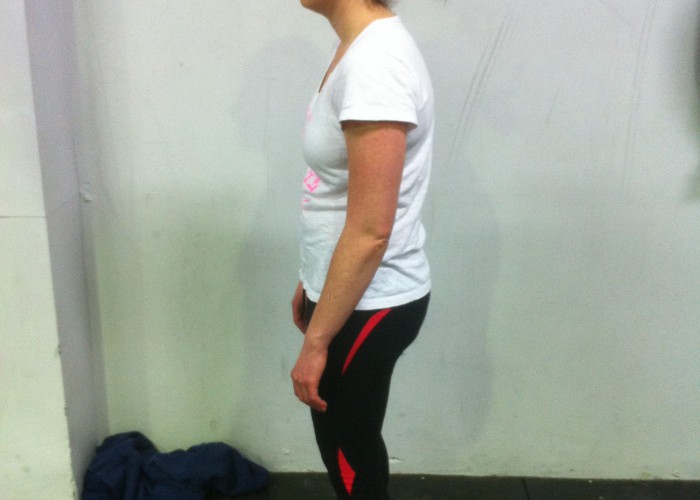
Related imageImage result for lordosis posture vs. flat back

Decreased lumbar lateral flexion range of motion
Side bending or lateral flexion of the lower back is important because a lack of side bending puts stress on the lumbar spine.  Movement should be like a slinky, smooth and continuous.   Most people who injure their lower back have poor movement due to restricted lateral flexion.

 Image result for lumbar lateral bending
Restriction in Hamstring range of motion
Tight hamstrings put more stress in the low back when moving.  Tight hamstrings can also represent problems in the calves, and gluteal muscles which will load the legs and restrict motion in the pelvis. This leads to more strain in and around the lower back vertebral joints and the associated muscles.
Image result for hamstring range of motion
Degenerative changes (arthritis) in the lumbar disc (low back)
This is a finding seen most often on x ray.  Is the degeneration as seen on an x ray the symptom or the problem? Usually it’s both. Poor spinal movement, trauma(s), and poor posture over years lead to excess wear and tear and degeneration or decay of the discs of the low back.
 Image result for degeneration lumbar spine x arthritis
Previous episodes of low back pain
Image result for back pain episode
Restriction in lateral flexion and hamstring range of motion, and a reduced lumbar lordosis were associated with an increased risk of developing low back pain over a 12-month period.
Degenerative disc changes and previous a history of low back pain are risk factors for recurrent episodes in the future.
The idea that back problems are self resolving is untrue for most of us.  The problem goes silent for a time and often shows up years later in a worse form.

Daily exercise, maintaining a good arch curve in the lower back can help prevent back pain and spinal problems.

Most of us are unaware of our problems with the back unless we experience pain.  “Normal” daily pain and stiffness is often not normal at all.  

As a Chiropractor, I look at the whole body and help you identify your back problems, even the silent ones.  The Chiropractic approach to restoring motion in the back using specific adjustments, muscle release and targeted exercises is proven in numerous studies, safe and well accepted.  

Seeing the right doctor of chiropractic first can resolve a back problem and help you  avoid unnecessary tests or more invasive interventions (such as injections or surgery)  that can be harmful in the long run.  Resolving the cause may prevent other motion related problems in other joints and parts of the body such as the neck, shoulders, knees, hips, ankles and feet.


Disclaimer


Material on this blog is provided for informational purposes only. It is general information that may not apply to you as an individual, and is not a substitute for your own doctor’s medical care or advice.


Reading this blog should not  be construed to mean that you and I have a patient-physician relationship. 
The inclusion of any link does not imply my endorsement of the linked site or its affiliates, 
NEVER DISREGARD MEDICAL ADVICE OR DELAY SEEKING MEDICAL CARE BECAUSE OF SOMETHING YOU HAVE READ ON OR ACCESSED THROUGH THIS WEB SITE.


Wednesday, June 13, 2018

Sitting is the new smoking!

Sitting is the new smoking!

ANJC Technique Council Chairman David I. Graber DC talks to posture expert Steven P Weiniger about the pitfalls of sitting all day.

Watch below:

.

Disclaimer


Material on this blog is provided for informational purposes only. It is general information that may not apply to you as an individual, and is not a substitute for your own doctor’s medical care or advice.


Reading this blog should not  be construed to mean that you and I have a patient-physician relationship. 
The inclusion of any link does not imply my endorsement of the linked site or its affiliates, 
NEVER DISREGARD MEDICAL ADVICE OR DELAY SEEKING MEDICAL CARE BECAUSE OF SOMETHING YOU HAVE READ ON OR ACCESSED THROUGH THIS WEB SITE.

NEW STUDY: Chiropractic Care Reduces Opioid Use


12,000 New Hampshire residents aged 18-99 with low back pain were studied and found that those who received chiropractic services had less harm and bad effects from medication use, according to a recent study.  They had a 55% less likelihood of filling an Opioid prescription!


A video with the study's author Dr. James Whedon is below:


https://www.ncbi.nlm.nih.gov/pubmed/29843912


Disclaimer


Material on this blog is provided for informational purposes only. It is general information that may not apply to you as an individual, and is not a substitute for your own doctor’s medical care or advice.


Reading this blog should not  be construed to mean that you and I have a patient-physician relationship. 
The inclusion of any link does not imply my endorsement of the linked site or its affiliates, 
NEVER DISREGARD MEDICAL ADVICE OR DELAY SEEKING MEDICAL CARE BECAUSE OF SOMETHING YOU HAVE READ ON OR ACCESSED THROUGH THIS WEB SITE.


Wednesday, May 9, 2018

SAFER ALTERNATIVES TO CLEANING WITH BLEACH

Related imageImage result for Household cleaning products natural bleach thymolImage result for Household cleaning products tea tree

Thymol based natural household cleaners work as well as bleach to clean and disinfect surfaces, without the health hazards of bleach use. Homemade Tea tree oil cleaners don't do as well. Here's a great video describing this:


https://www.youtube.com/watch?time_continue=316&v=XZOI4WF0dAU


Material on this blog is provided for informational purposes only. It is general information that may not apply to you as an individual, and is not a substitute for your own doctor’s medical care or advice.

Reading this blog should not  be construed to mean that you and I have a patient-physician relationship. 
The inclusion of any link does not imply my endorsement of the linked site or its affiliates, 
NEVER DISREGARD MEDICAL ADVICE OR DELAY SEEKING MEDICAL CARE BECAUSE OF SOMETHING YOU HAVE READ ON OR ACCESSED THROUGH THIS WEB SITE.

Tuesday, April 17, 2018

Chiropractic Adjustments Improve Lower Limb Strength


Can Chiropractic adjustments improve athletic performance? A recent study suggests that.  Published in the European Journal of Applied Physiology, a single session of spinal manipulation (SM)  increased muscle strength and corticospinal excitability to ankle plantar flexor (Soleus) muscles in elite Taekwondo athletes. The increased maximum voluntary contraction force lasted for 30 min and the corticospinal excitability increase persisted for at least 60 min.

The SM were performed by a licensed chiropractor who assessed the function of the entire spine and both sacroiliac joints for segmental dysfunction and performed SM where he found it was indicated. The clinical indicators for segmental dysfunction include joint tenderness, restricted intersegmental range of motion, asymmetric intervertebral muscle tension, and abnormal or blocked joint play and end-feel of a joint.

For more information:
Christiansen, T.L., Niazi, I.K., Holt, K. et al. Eur J Appl Physiol (2018). https://doi.org/10.1007/s00421-018-3799-x


Disclaimer


Material on this blog is provided for informational purposes only. It is general information that may not apply to you as an individual, and is not a substitute for your own doctor’s medical care or advice.

Reading this blog should not  be construed to mean that you and I have a patient-physician relationship. 
The inclusion of any link does not imply my endorsement of the linked site or its affiliates, 
NEVER DISREGARD MEDICAL ADVICE OR DELAY SEEKING MEDICAL CARE BECAUSE OF SOMETHING YOU HAVE READ ON OR ACCESSED THROUGH THIS WEB SITE.

Friday, March 16, 2018

Health Updates


Image result for health update chiropractic

 Health Updates


Courtesy of:
www.chirotrust.org


“I can't change the direction of the wind,
but I can adjust my sails to always reach my destination.”
~ Jimmy Dean
 
Mental Attitude: Parkinson’s Increases Brain Injury Risk. 
Taiwanese researchers report that patients with Parkinson’s disease (PD) have a 63% higher risk for traumatic brain injury (TBI) than individuals without PD. According to researchers, the most common cause of TBI among PD patients is falling down.
World Neurosurgery, February 2018
Health Alert: Obesity May Cause Sudden Cardiac Arrest Among Young People. 
According to a new study, obesity and high blood pressure may play a greater role in sudden cardiac arrest in young people than once thought. An analysis of nearly 3,800 cases of sudden cardiac arrest among individuals under 34 years of age showed that nearly 60% had a high rate of heart disease risk factors such as obesity, high blood pressure, high cholesterol, diabetes, and smoking. Lead researcher Dr. Sumeet Chugh adds, “One of the revelations of this study is that risk factors such as obesity may play a much larger role for the young who die from sudden cardiac arrest than previously known.”
Circulation, December 2017
Diet: Eat Fiber, Cut Diabetes Risk! 
Compared with adults who maintain a low-fiber diet, men who consume more than 38 grams of fiber per day and women who consume more than 25 grams of fiber per day are 20%-30% less likely to develop type 2 diabetes.
Journal of Nutrition, January 2018
Exercise: Light Exercise Increases Men's Lifespan. 
In this study, researchers followed 1,181 older males for five years and found a relationship between greater amounts of physical activity and greater longevity—even with as little as ten minutes of low-intensity physical activity a day! Researcher Dr. Barbara Jefferis adds, “The finding that [low-intensity physical activity] is associated with lower risk of mortality is especially important among older men, as most of their daily physical activity is of light intensity.”
British Journal of Sports Medicine, February 2018
Chiropractic: TMJ Dysfunction Resolves with Chiropractic Care. 
In this case study, a 24-year-old female with facial pain and jaw clicking on the right side presented for chiropractic care. An examination revealed that the patient had a head shift to the right of 19 mm. Her treatment plan consisted of a combination of mirror posture exercises, traction, and spinal adjustments that corrected her head posture and resolved her symptoms within twelve weeks. The finding reveals the benefits of manual therapies and posture correction in the management of temporomandibular joint (TMJ) dysfunction.
Journal of Physical Therapy Science, January 2018
Wellness/Prevention: Newer Breast MRI More Accurate. 
Past research has shown that when a malignant tumor grows in the breast, it disrupts the movement of water molecules in the surrounding healthy tissue. Now, researchers claim that diffusion kurtosis imaging—a new type of MRI that maps the movement of water molecules in breast tissue—can detect 98% of breast cancers while reducing false-positive findings by 70%.
Radiology, February 2018
“Happiness is not something you postpone for the future;
it is something you design for the present.”
~ Jim Rohn
 
Mental Attitude: Parkinson’s Patients at Increased Diabetes Risk. 
Hungarian researchers report that Parkinson’s disease patients are 2.86-times more likely to be diagnosed with type 2 diabetes than the general population.
Neuroscience Review (Hungary), January 2018
Health Alert: Sedatives May Be America's Next Drug Crisis. 
There’s a crisis brewing involving prescription sedatives such as alprazolam and diazepam. A new research review has found that prescriptions for these types of medications increased 67% between 1996 and 2013, with a resulting seven-fold increase in overdoses. Researcher Dr. Anna Lembke writes, “These are highly addictive and potentially lethal drugs, and many people don't know that… Sadly, most physicians are also unaware of this and blithely prescribe them without educating their patients about the risk of addiction.”
New England Journal of Medicine, February 2018
Diet: Yogurt May Reduce the Risk of Cardiovascular Disease. 
After reviewing data from two published studies involving over 55,000 men and 18,000 women, researchers conclude that consuming more than two servings of yogurt per week can cut the risk of major coronary heart disease and stroke among individuals with high blood pressure by about 20%.
American Journal of Hypertension, February 2018
Exercise: Physical Activity Promotes Better Sleep. 
If you’re having trouble getting a good night’s rest, try moving more during your waking hours. A study involving 260 older adults found that those who engaged in more physical activity during the day—either through formal exercise, leisure activities, or household activities—were about 23%-45% less likely to have trouble sleeping.
Journal of Aging and Physical Activity, February 2018
Chiropractic: COPD Patients Have Increased Risk for Chronic Pain. 
Chronic obstructive pulmonary disease (COPD) is a chronic lung disease that makes breathing difficult, and it is the third leading cause of death in the United States. An analysis of data from the European Health Interview Surveys for Spain concerning over 44,000 individuals revealed that patients with COPD have a 21%-38% elevated risk for migraines, chronic neck pain, and chronic low back pain.
Clinical Journal of Pain, February 2018
Wellness/Prevention: Retina Scan Could Reveal Your Heart Attack Risk. 
With the use of a retinal scanner that can look into the eye and deduce a patient’s age, their blood pressure, and whether or not they’re a smoker, researchers at Google claim they can identify individuals at risk for a heart attack or other cardiovascular events in the next five years with 70% accuracy. They hope that with improvements, their scanner can replace the current Systematic COronary Risk Evaluation (SCORE) tool that relies on a blood test to predict one’s heart attack and stroke risk with 72% accuracy.
Nature Biomedical Engineering, February 2018

“No matter what people tell you, words and ideas can change the world.”
~ Robin Williams
 
Mental Attitude: Alcohol Abuse Triples Dementia Risk. 
According to an analysis of data collected from French hospitals over a five-year period, patients with a diagnosed alcohol use disorder are ~3.35 times more likely to develop dementia than the general population.
Lancet Public Health, February 2018
Health Alert: Single Dads Face Higher Mortality. 
A study involving over 40,500 adults found that single fathers are three times more likely to experience an early death in comparison with single moms and partnered dads. The authors of the study speculate the increased mortality risk among single fathers may be due to a lack of social support, poor dietary habits, and an increased risk of alcohol abuse.
The Lancet Public Health, February 2018
Diet: Carb-Restricted Diet May Benefit Patients with Fatty Liver Disease. 
Non-alcoholic fatty liver disease (NAFLD) occurs when excess fat builds up in the liver cells from causes other than excessive alcohol consumption. In this study, researchers found that when participants with NAFLD adopted a low-carbohydrate diet, they experienced a reduction in the expression of genes involved in fatty acid synthesis and an increase in the expression of genes involved in metabolism and fatty acid oxidation. Researcher Dr. Adil Mardinoglu adds, “A carbohydrate-restricted dietary intervention such as the one we used can be an efficient treatment strategy for a severe health problem.”
Cell Metabolism, February 2018
Exercise: Music Makes Exercise More Enjoyable. 
Using portable electroencephalogram monitoring, researchers monitored the brainwaves of participants while they listened to music, a podcast, or no sound at all during exercise. They discovered that music rearranged the brain’s electrical frequency, resulting in a decrease in focus but an increase in enjoyment when compared with listening to a podcast or nothing at all. Researcher Dr. Marcelo Bigliassi explains, “We showed that music has the potential to increase beta waves and elicit a more positive emotional state… This can be capitalized upon during other forms of exercise and render a given activity more pleasurable. People who struggle to engage in physical activity programs should select appropriate pieces of music to exercise and see the way it makes you feel.”
Medicine & Science in Sports & Exercise, December 2017
Chiropractic: Risk Factors for Spinal Pain in Children. 
According to the results of a five-year study, the following factors increase a child’s risk for developing non-specific spinal pain: watching TV for more than two hours per day, sitting in an uncomfortable desk, sleeping problems, and a family history of back pain.
European Spine Journal, February 2018
Wellness/Prevention: Smoking Hurts Productivity… 
Using data from the 2013 US National Health and Wellness Survey, researchers calculate that smokers earn between $1,327 and $1,839 less per year than non-smokers.
Journal of Occupational and Environmental Medicine, February 2018

“We see the world not as it is, but as we are.”
~ Stephen Covey
 
Mental Attitude: Acne Can Be Emotionally Devastating. 
New research suggests that acne can throw some people into deep depression. An analysis of data concerning nearly two million patients found that those with acne had more than a 50% increased risk for developing clinical depression.
British Journal of Dermatology, February 2018
Health Alert: Is Noise a Risk Factor for Heart Disease? 
Everyday loud noises from traffic, construction, and raucous workplaces may increase one’s risk for heart disease. A review of data from past studies found that both people and animals exposed to frequent, loud noises had a greater risk for heart failure, irregular heart rhythms, high blood pressure, high cholesterol, and high blood sugar. Though the study does not prove cause and effect, the authors believe that noise pollution should be considered a risk factor for heart disease.
Journal of the American College of Cardiology, February 2018
Diet: A Compound in Kiwi May Prevent Fatty Liver Disease. 
Past studies have shown that the children of mothers who eat a high-fat diet while pregnant have an elevated risk for obesity or non-alcoholic fatty liver disease (NAFLD). In a new animal study, researchers have discovered that a compound called pyrroloquinoline quinone (PQQ) found in kiwi, celery, and papaya can prevent the progression of NAFLD in mice whose mothers consumed a high-fat diet during their gestation. The findings suggest that PQQ could be a feasible candidate for the prevention of NAFLD either by diet or supplementation.
Hepatology Communications, January 2018
Exercise: Setting Milestones for Exercise Motivation. 
Because the drive to get in shape can wane over time, the American College of Sports Medicine offers the following recommendations to help you stay motivated: set specific goals; develop a realistic action plan; use environmental cues, such as placing a gym bag by the door or setting reminders on your phone; have fun; make exercise convenient; record your progress; build a support network with friends or family who can work out with you; reward yourself with flowers, a movie, or new exercise clothes; and believe in yourself.
American College of Sports Medicine, February 2018
Chiropractic: Poor Balance Linked to Back Pain. 
A recent research review found that chronic low back pain can impair an individual’s standing balance. The authors of the review conclude, “Results from balance assessments should be used to indicate areas of improvement and help guide the course of treatment...”
Disability and Rehabilitation, January 2018
Wellness/Prevention: Keeping Drivers with Dementia Off the Road. 
In this study, researchers analyzed data concerning nearly 137,000 older drivers in the United States who had been hospitalized after a crash and found that those in states with in-person license renewal laws were about 38% less likely to have dementia. Study co-author Dr. Steven Albert writes, "The results of our study point to age-based licensing requirements as an effective way to improve safety."
Neurology, January 2018


Disclaimer


Material on this blog is provided for informational purposes only. It is general information that may not apply to you as an individual, and is not a substitute for your own doctor’s medical care or advice.

Reading this blog should not  be construed to mean that you and I have a patient-physician relationship. 
The inclusion of any link does not imply my endorsement of the linked site or its affiliates, 
NEVER DISREGARD MEDICAL ADVICE OR DELAY SEEKING MEDICAL CARE BECAUSE OF SOMETHING YOU HAVE READ ON OR ACCESSED THROUGH THIS WEB SITE.

Thursday, March 8, 2018

3 Things To Do After The Snowstorm Has Passed!


The Snowpocalypse has passed and 2 feet of snow was dumped on parts of Morris county! I hope all of you are safe. In the aftermath of this storm, here are 3 things to remember:

  1. Watch your step - while we see many injuries due to snow shoveling after a storm like this, even more come in from slipping and falling. The slush on the ground will freeze overnight, leading to black ice. Wear boots or shoes with a traction bottom and watch your step.
  2. Drive slower - black ice can make side roads slick and slowing down is the best precaution to lessen your chances of needing to hit the brakes in order to stop.
  3. Be Paranoid - these days too many drivers and pedestrians are distracted by texting and using their phone. Don't assume they see you. Use your horn liberally, even if it causes a nasty look or hand gesture towards you. Oh, and you're not using your phone when driving or walking across a street, right?
Here are a few great links:

Our office is open on Friday all day.
Need an appointment? Call: 973-335-1100

Sincerely,
Dr. David Graber

Visit our Website:  DrGraber.com
Fiend us on Facebook: Graber Chiropractic Center


 Disclaimer:
Material on this blog is provided for informational purposes only. It is general information that may not apply to you as an individual, and is not a substitute for your own doctor’s medical care or advice.


Reading this blog should not  be construed to mean that you and I have a patient-physician relationship. 
The inclusion of any link does not imply my endorsement of the linked site or its affiliates, 
NEVER DISREGARD MEDICAL ADVICE OR DELAY SEEKING MEDICAL CARE BECAUSE OF SOMETHING YOU HAVE READ ON OR ACCESSED THROUGH THIS WEB SITE.