Wednesday, January 31, 2018

BEST MATTRESS FOR BACK PAIN


A very common question I get form back pain patients is, "What is the best mattress to sleep on?" A really excellent question and a health item too often overlooked by many people. We spend 1/4 -1/3 of our lives on average sleeping, so what we sleep on for body support and proper rest is essential for good health.

There are alot of mattresses out in the market, and they all have a story. There are no shortage of choices in compostion ( spring, gel, air, water, foam, latex, etc), support (soft, meduium, firm, extra-firm), styles (platform, sleep number, futon, pillow-top, boxspring, etc.), and prices ($99 - $10,000).

So, what shoul you choose? Here are a few guidelines:

Medium-Firm Mattress.
The are a few studies on choosing rthe best mattress. One study conducted on 313 patients suffering from lower back pain, those using medium-firm mattresses reported less pain when lying in bed as well as less pain-related disability compared with those using firm mattresses.

This makes sense and goes along with what I have found in treating back pain patients for over 30 years. 

Your mattress should be firm enough to support your lower back if you are a back-sleeper, while being soft enough to contour to your body. A too-stiff mattresses tend to push against the spine while too-soft mattresses don’t offer enough support. A medium firm mattress is ideal for this type of sleeper.

For side sleepers, a mattress with slight softness is necessary to cushion the shoulders and hips.

For stomach sleepers, the best thing is to learn how to sleep on your back or side.

I recommend a firm matress of whatever material feels right, with a pillow-top to give you the softness you need. The pillow-top can vary in thickness (2 - 12 inches) and be made of egg-crate foam, gel, or anything that fits your comfort. Air mattresses such as the sleep number bed can be adjusted for firmness, but should also have a pillow-top for comfort.

Replace As Needed
Even the best mattresses wear down. A new mattress is always more firm. Spring mattresses should be replaced in about 10 years. Sooner if you don't monthly rotate it, and quarterly flip it. Avoid getting an attached pillow-top on the mattress, so flipping doesn't turn the soft side down.

Test-Drive It For At Least 1 Week
The only way to know if a mattress is right for you is to sleep on it. 2 minutes lying on it in the store isn't enough to know how you'll feel after 6-8 hours on it day to day. You'll need at least a week to see if it fits you.

Finally, pillow support and sleep position are also very important to getting a good night's sleep. We'll cover that in future blogs.

If you have any questions, feel free to contact me.


Disclaimer


Material on this blog is provided for informational purposes only. It is general information that may not apply to you as an individual, and is not a substitute for your own doctor’s medical care or advice.

Reading this blog should not  be construed to mean that you and I have a patient-physician relationship. 
The inclusion of any link does not imply my endorsement of the linked site or its affiliates, 
NEVER DISREGARD MEDICAL ADVICE OR DELAY SEEKING MEDICAL CARE BECAUSE OF SOMETHING YOU HAVE READ ON OR ACCESSED THROUGH THIS WEB SITE.

Sunday, January 28, 2018

TMJ DISORDERS AND CHIROPRACTIC CARE

Photo of David Graber, DC - Parsippany, NJ, United States. Teaching NY Chiropractors how to examine the TMJ (Jaw).


Problems with the jaw joint or TMJ (Temporomandibular Joint) are very common. I have successfully treated many cases of TMJ disorders and teach non-surgical treatments to doctors that help this disorder. Here's a few things to know:

Posture contributes to TMJ disorders (TMD). A recent study found posture problems aggravate muscular TMD. The most common are an overarching of the low back (lumbar hyperlordosis), forward head posture and knees turned inward (genu valgus). [1]

Hands-on treatments and adjustments to the Temporomandibular joint immediately improves the posture in patients with TMD, relieves jaw and facial pain and headaches, and corrects the jaw movement.[2].[3]

Hands-on adjustments and manual therapy has been shown to be more cost effective and less prone to side effects than dental treatment. [4]

Our office also works with TMJ specialists and dentists to relieve the pain and problems of TMJ disorders. 


[1] Cortese s, et al. Postural alterations as a risk factor for temporomandibular disorders. Acta Odontol Latinoam. 2017 Aug;30(2):57-61.

[2] Amaral AP, et al. Immediate effect of nonspecific mandibular mobilization on postural control in subjects with temporomandibular disorder: a single-blind, randomized, controlled clinical trial. Braz J Phys Ther. 2013 Mar-Apr;17(2):121-7

[3] Kalamir A, Bonello R, Graham P, Vitiello AL, Pollard H. Intraoral myofascial therapy for chronic myogenous temporomandibular disorder: a randomized controlled trial. J Manipulative Physiol Ther. 2012;35(1):26-37. 

[4] Kalamir A et al. Manual therapy for temporomandibular disorders: A review of the literature. Journal of Bodywork and Movement Therapies. 11. 84-90. 10.1016/j.jbmt.2006.07.003.


Disclaimer


Material on this blog is provided for informational purposes only. It is general information that may not apply to you as an individual, and is not a substitute for your own doctor’s medical care or advice.

Reading this blog should not  be construed to mean that you and I have a patient-physician relationship. 
The inclusion of any link does not imply my endorsement of the linked site or its affiliates, 
NEVER DISREGARD MEDICAL ADVICE OR DELAY SEEKING MEDICAL CARE BECAUSE OF SOMETHING YOU HAVE READ ON OR ACCESSED THROUGH THIS WEB SITE.
Tuesday, January 2, 2018

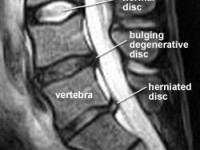
LOW BACK PAIN AND MRI FINDINGS DON'T ALWAYS ADD UP

People with MRI findings of disc disease or disc herniation do not have more low back pain as they age. In a new study, 91 patients without low back pain had MRI's and were followed up after 10 years with another MRI. There was no difference in the amount of back pain between those whose MRI's showed more disc disease or herniation than those whose MRI's were unchanged.

3 takeaways:

1. Back pain is caused more by how your spine functions than how it appears on an MRI!
2. Never have a doctor, surgeon or therapist treat your back solely on your MRI findings!
3. Never give up hope of getting better just because your MRI shows disc degeneration or herniation!

In our office we treat people, not MRI or tests.

https://www.ncbi.nlm.nih.gov/m/pubmed/29141001/


Disclaimer


Material on this blog is provided for informational purposes only. It is general information that may not apply to you as an individual, and is not a substitute for your own doctor’s medical care or advice.

Reading this blog should not  be construed to mean that you and I have a patient-physician relationship. 
The inclusion of any link does not imply my endorsement of the linked site or its affiliates, 
NEVER DISREGARD MEDICAL ADVICE OR DELAY SEEKING MEDICAL CARE BECAUSE OF SOMETHING YOU HAVE READ ON OR ACCESSED THROUGH THIS WEB SITE.

THANK YOU FOR A SUCCESSFUL FOOD & TOY DRIVE!


THANK YOU!
We collected 50 bags of food, toys, and other essentials, along with $700 in gift cards for the Jersey Battered Women's Shelter and St. Peter's Home! Your donations will make a difference in so many lives. Thank you, thank you for your donations.


Disclaimer

Material on this blog is provided for informational purposes only. It is general information that may not apply to you as an individual, and is not a substitute for your own doctor’s medical care or advice.


Reading this blog should not  be construed to mean that you and I have a patient-physician relationship. 

The inclusion of any link does not imply my endorsement of the linked site or its affiliates, 
NEVER DISREGARD MEDICAL ADVICE OR DELAY SEEKING MEDICAL CARE BECAUSE OF SOMETHING YOU HAVE READ ON OR ACCESSED THROUGH THIS WEB SITE.

Tuesday, December 19, 2017

FDA Bans Chemicals Used In Antibacterial Soaps as Ineffective

Image result for triclosan products


The FDA has ruled that products containing 2 dozen ingredients including  triclosan, can no longer be marketed as antiseptic. This affects many antiseptic soaps, hand sanitizers, cosmetics, ointments, and even toothpaste. Some popular brands are:


Soaps:
* Dial® Liquid Soap
* Softsoap® Antibacterial Liquid Hand Soap
* Tea Tree Therapy™ Liquid Soap
* Provon® Soap
* Clearasil® Daily Face Wash
* Dermatologica® Skin Purifying Wipes
* Clean & Clear Foaming Facial Cleanser
* DermaKleen™ Antibacterial Lotion Soap
* Naturade Aloe Vera 80® Antibacterial Soap
* CVS Antibacterial Soap
* pHisoderm Antibacterial Skin Cleanser
Dental Care:
* Colgate Total®; Breeze™ Triclosan Mouthwash
* Reach® Antibacterial Toothbrush
* Janina Diamond Whitening Toothpaste
Cosmetics:
* Supre® Café Bronzer™
* TotalSkinCare Makeup Kit
* Garden Botanika® Powder Foundation
* Mavala Lip Base
* Jason Natural Cosmetics
* Blemish Cover Stick
* Movate® Skin Litening Cream HQ
* Paul Mitchell Detangler Comb
* Revlon ColorStay LipSHINE Lipcolor Plus Gloss
* Dazzle
Deodorant:
* Old Spice High Endurance Stick Deodorant
* Right Guard Sport Deodorant
* Queen Helene® Tea Trea Oil Deodorant and Aloe Deodorant
* Nature De France Le Stick Natural Stick Deodorant
* DeCleor Deodorant Stick
* Epoch® Deodorant with Citrisomes
* X Air Maximum Strength Deodorant
Other Personal Care Products:
* Gillette® Complete Skin Care MultiGel Aerosol Shave Gel
* Murad Acne Complex® Kit®
* Diabet-x™ Cream
* T.Taio™ sponges and wipes
* Aveeno Therapeutic Shave Gel
First Aid:
* SyDERMA® Skin Protectant plus First Aid Antiseptic
* Solarcaine®
* First Aid Medicated Spray;
Nexcare™ First Aid
* Skin Crack Care
* First Aid/Burn Cream
* HealWell® Night Splint
* 11-1X1: Universal Cervical Collar with Microban
Kitchenware:
* Farberware® Microban Steakknife Set and Cutting Boards
* Franklin Machine Products FMP Ice Cream Scoop SZ 20 Microban
* Hobart Semi-Automatic Slicer
* Chix® Food Service Wipes with Microban
* Compact Web Foot® Wet Mop Heads
Computer Equipment:
* Fellowes Cordless Microban Keyboard and Microban Mouse Pad
Clothes:
* Merrell Shoes
* Sabatier Chef's Apron
* Dickies Socks
* Fruit of the Loom Socks
* Biofresh® Socks
Children's Toys:
* Playskool® :
o Stack 'n Scoop Whale
o Rockin' Radio
o Hourglass
o Sounds Around Driver
o Roll 'n' Rattle Ball
o Animal Sounds Phone
o Busy Beads Pal
o Pop 'n' Spin Top
o Lights 'n' Surprise Laptop
Other:
* Bionare® Cool Mist Humidifier
* Microban® All Weather Reinforced Hose
* Thomasville® Furniture
* Deciguard AB Ear Plugs
* Bauer® 5000 Helmet
* Aquatic Whirlpools
* Miller Paint Interior Paint
* QVC® Collapsible 40-Can Cooler
* Holmes Foot Buddy™ Foot Warmer
* Blue Mountain Wall Coverings
* California Paints®
* EHC AMRail Escalator Handrails
* Dupont™ Air Filters
* Durelle™ Carpet Cushions
* Advanta One Laminate Floors
* San Luis Blankets
* J Cloth® towels
* JERMEX mops
Source: BeyondPesticides.org

The amount of antiseptic ingredients in these and other "antibacterial" products isn't enough to have any of the marketed effects. They aren't any more effective than soap and water. There is evidence that they might even be harmful.

In place of triclosan products, you can use plain soap and water, washing for 20 seconds. Alcohol-based hand sanitizers with an alcohol concentration between 60 and 95 percent are good if soap and water aren't available. Essential oils such as lavender oil, tea tree oil, witch hazel, pure aloe vera gel, and vitamin E oil can be helpful. 

https://www.medpagetoday.com/hospitalbasedmedicine/infectioncontrol/69990?xid=NL_breakingnews_2017-12-19&eun=g485087d0r

https://www.medpagetoday.com/infectiousdisease/generalinfectiousdisease/60016

https://www.beyondpesticides.org/programs/antibacterials/triclosan/products-containing-triclosan


Disclaimer

Material on this blog is provided for informational purposes only. It is general information that may not apply to you as an individual, and is not a substitute for your own doctor’s medical care or advice.


Reading this blog should not  be construed to mean that you and I have a patient-physician relationship. 

The inclusion of any link does not imply my endorsement of the linked site or its affiliates, 
NEVER DISREGARD MEDICAL ADVICE OR DELAY SEEKING MEDICAL CARE BECAUSE OF SOMETHING YOU HAVE READ ON OR ACCESSED THROUGH THIS WEB SITE.

Monday, December 4, 2017

Winter Blues: Understanding And Managing The S.A.D. Condition

Image result for winter blues


This time of the year as the days are shorter and the cold settles in, many people find themselves feeling tired, depressed, agitated, having trouble concentrating, having poor sleep, craving sugar, carbohydrates and comfort food, having a sense of heaviness in your arms and legs, and feel like hibernating away from all human contact and binge watch Netflix. If this is you or someone you know, you may be experiencing a condition known as Seasonal Affective Disorder, or SAD.
Norman E. Rosenthal, M.D. is the psychiatrist who first described the condition in the 1980’s. People with SAD feel depressed during the shorter and darker days of winter (especially from November though February), and more cheerful and energetic during the brightness of spring and summer. It’s related to of less direct and intense sunlight effects on the body’s hormonal and nervous systems.

While varying degrees of SAD can affect anyone, the most common affected are those who are:
~ Women
~ Age 15 -55
~ Have a family history of SAD or depression
~ Live far north of the equator (like New Jersey!)
~ Have a personal history of depression or bipolar disorder
~ Have low vitamin D levels

If you have SAD, you can help yourself through a combination of the following:

1. Use a light box. Light therapy is key in treating SAD. Think of light as a nutrient that you’re getting enough of in winter. I recommend the use light therapy daily.
Generally, the light box should:
·         Provide an exposure to 10,000 lux of light
·         Emit as little UV light as possible

When using the light box it’s best to do the following:
·         Use it within the first hour of waking up in the morning
·         Use it for about 20 to 30 minutes
·         Keep it at a distance of about 16 to 24 inches (41 to 61 centimeters) from the face
·         Keep your eyes open, but not looking directly at the light

There are many good light boxes on the market. The light box I personally use is Lightphoria by Sphere Gadget Technologies.
2. Exercise. Just 30 minutes of walking on a treadmill has been shown to help people with SAD. Research also suggests that it’s the frequency and consistency of exercising, rather than the duration or intensity. A little everyday is better than a marathon session once or twice a week.

3. Get Out. Get outdoors as much as possible whenever the sun is out. If warm enough, go without a hat to allow your head to absorb the rays.

4. Take a Vitamin D3 Supplement. Have a blood test to see if your vitamin D levels are very low.

5. Eat Well. Lots of lean protein, leafy greens and fish. You’ll need t fight the comfort food cravings. Soups and stews are particularly good. When you do get the urge for carbs, choose complex, whole-grain varieties, like whole-grain pasta and bread, instead of nutrition-deficient white carbohydrates.

6. Join the Conversation. Keep connected with those you are close with and care about. Regularly make calls and visit, emails & texts are not as effective for raising your mood. Don’t be shy about asking for help during this down season.

7. Go To Sleep Earlier. The sun sets earlier, so fall more in tune with nature’s rhythm by going to bed earlier to help re-set your own internal clock.

8. Go South, or West. Spend some time in sunnier climates to recharge your internal solar batteries. 

9. Seek Help. If you are finding yourself falling into a deep emotional hole of despair, lethargy, and have difficulty functioning in your life, seek out professional help. 

10. This Too Shall Pass. After the winter solstice (around December 21st) the days get longer. Keep focusing on the fact that eventually spring will arrive and with it a lifting of your mood and spirit.


Disclaimer

Material on this blog is provided for informational purposes only. It is general information that may not apply to you as an individual, and is not a substitute for your own doctor’s medical care or advice.


Reading this blog should not  be construed to mean that you and I have a patient-physician relationship. 

The inclusion of any link does not imply my endorsement of the linked site or its affiliates, 
NEVER DISREGARD MEDICAL ADVICE OR DELAY SEEKING MEDICAL CARE BECAUSE OF SOMETHING YOU HAVE READ ON OR ACCESSED THROUGH THIS WEB SITE.

Friday, December 1, 2017

Surprise: Chiropractors Can Treat These 5 Conditions

US News and World Report recently published a good article on the benefits of Chiropractic care. It's refreshing to see the mainstream media covering how adjustments and Chiropractic care can help more than back and neck pain, whiplash, and herniated disc conditions.

The article touches on 5 conditions commonly helped in our office. These are:

Migraine and Tension Headaches
Stress and Anxiety
Fibromyalgia
Weak Immune system
Flexibility

You can read the article here:

https://health.usnews.com/health-news/patient-advice/articles/2015/11/30/surprise-chiropractors-can-treat-these-5-conditions


Disclaimer


Material on this blog is provided for informational purposes only. It is general information that may not apply to you as an individual, and is not a substitute for your own doctor’s medical care or advice.


Reading this blog should not  be construed to mean that you and I have a patient-physician relationship. 
The inclusion of any link does not imply my endorsement of the linked site or its affiliates, 
NEVER DISREGARD MEDICAL ADVICE OR DELAY SEEKING MEDICAL CARE BECAUSE OF SOMETHING YOU HAVE READ ON OR ACCESSED THROUGH THIS WEB SITE.