Friday, February 23, 2018

Drugs are NOT the answer for many health problems.


Healthcare expenses  in the US are expected to rise faster than inflation, and prescription 
drugs are expected to see the fastest growth, about 6.3 percent a year on average.

Drugs are NOT the answer for many health problems.Unfortunately, they are too often the only treatment offered in the medical community. 

Chiropractic care is often a non-drug solution for many pain conditions such as back pain, neck pain,
headaches, shoulder and hip pain, herniated discs, sciatica, "pinched nerves", etc. 


https://www.washingtonpost.com/news/wonk/wp/2018/02/14/u-s-spending-on-drugs-will-grow-faster-than-other-health-care-services-over-the-next-decade/?utm_term=.44c94e4bbcb2

http://thehill.com/business-a-lobbying/373902-us-spending-on-health-care-estimated-to-reach-57-trillion-in-2026?utm_campaign=KHN%3A+Daily+Health+Policy+Report&utm_source=hs_email&utm_medium=email&utm_content=60709632&_hsenc=p2ANqtz-8JmL_me8HpdFoYKaqmjxAHAPAJs3GrBj5GavbqJM-L346OYSB8LloyXpZHqt-h3Z1w_V9W8AQBz2LXiaSmtUzz-gXz8g&_hsmi=60709632


Disclaimer


Material on this blog is provided for informational purposes only. It is general information that may not apply to you as an individual, and is not a substitute for your own doctor’s medical care or advice.


Reading this blog should not  be construed to mean that you and I have a patient-physician relationship. 
The inclusion of any link does not imply my endorsement of the linked site or its affiliates, 
NEVER DISREGARD MEDICAL ADVICE OR DELAY SEEKING MEDICAL CARE BECAUSE OF SOMETHING YOU HAVE READ ON OR ACCESSED THROUGH THIS WEB SITE.

Monday, February 12, 2018

Monday, February 5, 2018

Vitamin D - One Vitamin You Probably Should Be Taking


Vitamin D has been names the "sunshine vitamin" because it’s produced in your skin in response to sunlight. However, the increasing number of benefits that are found from it make it a sunshine for our health!


Vitamin D has multiple roles in the body, helping to:
  • Maintain the health of bones and teeth.
  • Support the health of the immune system and fight infectious disease.
  • Improve cognitive brain function and preventing depression, especially in older adults.
  • Protects against multiple sclerosis
  • Aid in type 1 diabetes management.
  • Support lung function and cardiovascular health.
  • Influence the expression of genes involved in cancer development.
  • Act as a testosterone booster

A recent study has shown that Vitamin D3 helps repair endothelial cells in the cardiovascular system. These cells suffer damage after a heart attack and stroke, and from chronic conditions like diabetes and hypertension. 

Vitamin D helps prevent the flu and other infectious diseases. Vitamin D supplementation is essential in the winter, due to the lack of sunshine and the excessive covering of our skin to protect us from the cold weather. One of the reasons for an increase in the number of flu and respiratory diseases in the winter is lower Vitamin D3 levels.

Vitamin D is a fat-soluble nutrient. It is found naturally in salmon, sardines, shrimp, swordfish, raw maitake mushrooms, and egg yolk. It is also added to dairy products, cereal, and orange juice. 

It is estimated that sensible sun exposure on bare skin for 5-10 minutes 2-3 times per week allows most people to produce sufficient vitamin D, but vitamin D breaks down quite quickly, meaning that stores can run low, especially in winter.

The easiest way to access our need for vitamin D with a blood test. Normal Vitamin D levels are 35 to 40 ng/ml (90-100 nmol/L).


Supplementing with Vitamin D, 100 IU (2.5 mcg) of vitamin D per day can raise the vitamin D blood test only 1 ng/ml or just 2.5 nmol/L after 2 to 3 months. For example, 500 IU (12.5 mcg) per day increases vitamin D blood levels 5 ng/ml (12.5 nmol/L). Vitamin D3 supplementation (cholecalciferol) is recommended over D2 supplementation (ergocalciferol), since D3 is used more effectively in the body.
The safe upper limit in the United States and Canada is 4,000IU/day. Research suggests that the true safe upper limit is 10,000IU/day. Taking 400 - 2,00IU/day is safe and effective for most people.
References:
https://www.doctornews.com/article/why-vitamin-d3-could-be-most-important-heart-supplement-all?
https://www.dovepress.com/nanomedical-studies-of-the-restoration-of-nitric-oxideperoxynitrite-ba-peer-reviewed-article-IJN
https://examine.com/supplements/vitamin-d/
https://www.medicalnewstoday.com/articles/161618.php
https://www.ncbi.nlm.nih.gov/pubmed/26998791
http://www.todaysdietitian.com/newarchives/070114p48.shtml


Disclaimer


Material on this blog is provided for informational purposes only. It is general information that may not apply to you as an individual, and is not a substitute for your own doctor’s medical care or advice.

Reading this blog should not  be construed to mean that you and I have a patient-physician relationship. 
The inclusion of any link does not imply my endorsement of the linked site or its affiliates, 
NEVER DISREGARD MEDICAL ADVICE OR DELAY SEEKING MEDICAL CARE BECAUSE OF SOMETHING YOU HAVE READ ON OR ACCESSED THROUGH THIS WEB SITE.

Wednesday, January 31, 2018

BEST MATTRESS FOR BACK PAIN


A very common question I get form back pain patients is, "What is the best mattress to sleep on?" A really excellent question and a health item too often overlooked by many people. We spend 1/4 -1/3 of our lives on average sleeping, so what we sleep on for body support and proper rest is essential for good health.

There are alot of mattresses out in the market, and they all have a story. There are no shortage of choices in compostion ( spring, gel, air, water, foam, latex, etc), support (soft, meduium, firm, extra-firm), styles (platform, sleep number, futon, pillow-top, boxspring, etc.), and prices ($99 - $10,000).

So, what shoul you choose? Here are a few guidelines:

Medium-Firm Mattress.
The are a few studies on choosing rthe best mattress. One study conducted on 313 patients suffering from lower back pain, those using medium-firm mattresses reported less pain when lying in bed as well as less pain-related disability compared with those using firm mattresses.

This makes sense and goes along with what I have found in treating back pain patients for over 30 years. 

Your mattress should be firm enough to support your lower back if you are a back-sleeper, while being soft enough to contour to your body. A too-stiff mattresses tend to push against the spine while too-soft mattresses don’t offer enough support. A medium firm mattress is ideal for this type of sleeper.

For side sleepers, a mattress with slight softness is necessary to cushion the shoulders and hips.

For stomach sleepers, the best thing is to learn how to sleep on your back or side.

I recommend a firm matress of whatever material feels right, with a pillow-top to give you the softness you need. The pillow-top can vary in thickness (2 - 12 inches) and be made of egg-crate foam, gel, or anything that fits your comfort. Air mattresses such as the sleep number bed can be adjusted for firmness, but should also have a pillow-top for comfort.

Replace As Needed
Even the best mattresses wear down. A new mattress is always more firm. Spring mattresses should be replaced in about 10 years. Sooner if you don't monthly rotate it, and quarterly flip it. Avoid getting an attached pillow-top on the mattress, so flipping doesn't turn the soft side down.

Test-Drive It For At Least 1 Week
The only way to know if a mattress is right for you is to sleep on it. 2 minutes lying on it in the store isn't enough to know how you'll feel after 6-8 hours on it day to day. You'll need at least a week to see if it fits you.

Finally, pillow support and sleep position are also very important to getting a good night's sleep. We'll cover that in future blogs.

If you have any questions, feel free to contact me.


Disclaimer


Material on this blog is provided for informational purposes only. It is general information that may not apply to you as an individual, and is not a substitute for your own doctor’s medical care or advice.

Reading this blog should not  be construed to mean that you and I have a patient-physician relationship. 
The inclusion of any link does not imply my endorsement of the linked site or its affiliates, 
NEVER DISREGARD MEDICAL ADVICE OR DELAY SEEKING MEDICAL CARE BECAUSE OF SOMETHING YOU HAVE READ ON OR ACCESSED THROUGH THIS WEB SITE.

Sunday, January 28, 2018

TMJ DISORDERS AND CHIROPRACTIC CARE

Photo of David Graber, DC - Parsippany, NJ, United States. Teaching NY Chiropractors how to examine the TMJ (Jaw).


Problems with the jaw joint or TMJ (Temporomandibular Joint) are very common. I have successfully treated many cases of TMJ disorders and teach non-surgical treatments to doctors that help this disorder. Here's a few things to know:

Posture contributes to TMJ disorders (TMD). A recent study found posture problems aggravate muscular TMD. The most common are an overarching of the low back (lumbar hyperlordosis), forward head posture and knees turned inward (genu valgus). [1]

Hands-on treatments and adjustments to the Temporomandibular joint immediately improves the posture in patients with TMD, relieves jaw and facial pain and headaches, and corrects the jaw movement.[2].[3]

Hands-on adjustments and manual therapy has been shown to be more cost effective and less prone to side effects than dental treatment. [4]

Our office also works with TMJ specialists and dentists to relieve the pain and problems of TMJ disorders. 


[1] Cortese s, et al. Postural alterations as a risk factor for temporomandibular disorders. Acta Odontol Latinoam. 2017 Aug;30(2):57-61.

[2] Amaral AP, et al. Immediate effect of nonspecific mandibular mobilization on postural control in subjects with temporomandibular disorder: a single-blind, randomized, controlled clinical trial. Braz J Phys Ther. 2013 Mar-Apr;17(2):121-7

[3] Kalamir A, Bonello R, Graham P, Vitiello AL, Pollard H. Intraoral myofascial therapy for chronic myogenous temporomandibular disorder: a randomized controlled trial. J Manipulative Physiol Ther. 2012;35(1):26-37. 

[4] Kalamir A et al. Manual therapy for temporomandibular disorders: A review of the literature. Journal of Bodywork and Movement Therapies. 11. 84-90. 10.1016/j.jbmt.2006.07.003.


Disclaimer


Material on this blog is provided for informational purposes only. It is general information that may not apply to you as an individual, and is not a substitute for your own doctor’s medical care or advice.

Reading this blog should not  be construed to mean that you and I have a patient-physician relationship. 
The inclusion of any link does not imply my endorsement of the linked site or its affiliates, 
NEVER DISREGARD MEDICAL ADVICE OR DELAY SEEKING MEDICAL CARE BECAUSE OF SOMETHING YOU HAVE READ ON OR ACCESSED THROUGH THIS WEB SITE.

Tuesday, January 2, 2018

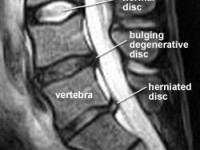
LOW BACK PAIN AND MRI FINDINGS DON'T ALWAYS ADD UP

People with MRI findings of disc disease or disc herniation do not have more low back pain as they age. In a new study, 91 patients without low back pain had MRI's and were followed up after 10 years with another MRI. There was no difference in the amount of back pain between those whose MRI's showed more disc disease or herniation than those whose MRI's were unchanged.

3 takeaways:

1. Back pain is caused more by how your spine functions than how it appears on an MRI!
2. Never have a doctor, surgeon or therapist treat your back solely on your MRI findings!
3. Never give up hope of getting better just because your MRI shows disc degeneration or herniation!

In our office we treat people, not MRI or tests.

https://www.ncbi.nlm.nih.gov/m/pubmed/29141001/


Disclaimer


Material on this blog is provided for informational purposes only. It is general information that may not apply to you as an individual, and is not a substitute for your own doctor’s medical care or advice.

Reading this blog should not  be construed to mean that you and I have a patient-physician relationship. 
The inclusion of any link does not imply my endorsement of the linked site or its affiliates, 
NEVER DISREGARD MEDICAL ADVICE OR DELAY SEEKING MEDICAL CARE BECAUSE OF SOMETHING YOU HAVE READ ON OR ACCESSED THROUGH THIS WEB SITE.

THANK YOU FOR A SUCCESSFUL FOOD & TOY DRIVE!


THANK YOU!
We collected 50 bags of food, toys, and other essentials, along with $700 in gift cards for the Jersey Battered Women's Shelter and St. Peter's Home! Your donations will make a difference in so many lives. Thank you, thank you for your donations.


Disclaimer

Material on this blog is provided for informational purposes only. It is general information that may not apply to you as an individual, and is not a substitute for your own doctor’s medical care or advice.


Reading this blog should not  be construed to mean that you and I have a patient-physician relationship. 

The inclusion of any link does not imply my endorsement of the linked site or its affiliates, 
NEVER DISREGARD MEDICAL ADVICE OR DELAY SEEKING MEDICAL CARE BECAUSE OF SOMETHING YOU HAVE READ ON OR ACCESSED THROUGH THIS WEB SITE.