Wednesday, October 15, 2014

"What's a Chiropractic Adjustment?"


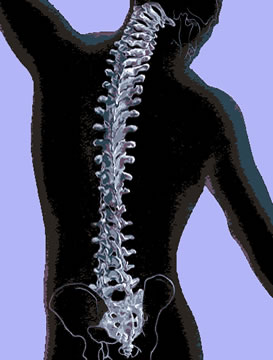
A Chiropractic physician is a primary care professional who is focused on delivering care that is safe, natural and effective through chiropractic adjustment. Today, many people still don’t know what chiropractic adjustment is or what it is like to be adjusted by a Chiropractic physician. In this video, Dr. David Graber, an ANJC Chiropractic Physician, joins Dr. Donald DeFabio to talk about chiropractic adjustment, its benefits and so much more. Watch it here:

ANJC - How Well Adjusted Are You? 


Dr. Graber Goes Back To School! FAKTR training.


This past weekend I attended a fabulous seminar on FAKTR ( Functional and Kinetic Treatment and Rehabilitation), cutting edge soft tissue techniques for handling (without surgery) the most stubborn joint, tendon, muscle, and ligament conditions!

It was great to spend many hours with some excellent doctors learning how to help more people. I am incorporating this technique in the practice. Bring me your pain!


Dr. Graber training in the soft tissue technique, FAKTR.

Tuesday, October 14, 2014

Fruits and Vegetables Reduce Hip Fractures!


Fruit and vegetable intake and risk of hip fracture:

A Swedish study out this week has found that men and women eating less than 5 servings/day of fruits and vegetables have more hip fractures. From the study:

"We conclude that there is a dose-response association between fruit and vegetable intake and hip fracture such that an intake below the recommended 5 servings/day confers higher rates of hip fracture. Intakes above this recommendation do not seem to further lower the risk."

While that's not a large amount of food, over 93% of us don't hit our vegetable target, and 92% of us don't hit our fruit target, according to stats from the Produce for Better Health Foundation's State of the Plate: 2010 Study.

To find out how much a serving is, these links are helpful:

http://www.cookinglight.com/healthy-living/healthy-habits/how-much-serving-fruits-vegetables/apple-serving-size
http://www.eatingwell.com/nutrition_health/nutrition_news_information/what_is_a_serving_of_vegetables

Eat well, be well!


http://www.ncbi.nlm.nih.gov/pubmed/25294687

Monday, October 13, 2014

Overtraining in one sport can harm youth athletes

My letter to the NJ Star Ledger editor , published on Saturday, October 11, 2014. 

Overtraining in one sport can harm youth athletes: Letter

youth-sports.jpgyouth-sports.jpg
In this file photo, Newark Bears players run through drills at their Pee Wee football practice at Weequahic High School in Newark. (Andrew Miller/For The Star-Ledger)
 
Letters to the Editor/The Star-Ledger By Letters to the Editor/The Star-Ledger
on October 11, 2014 at 9:00 AM, updated October 11, 2014 at 9:07 AM

As a chiropractic sports physician who has taken care of hundreds of youth athletes during the past two decades, and a youth sports coach for 10 years, I applaud Mario Colitti's guest column in the Oct. 6 Star-Ledger.
I have seen more injuries in children and teenagers from overtraining due to specialization than from competition. Parents and coaches need to remember that these are not mini-adults and their teams are not the "junior Yankees" or "junior Giants."
Young athletes are in various stages of development in body, mind, and emotionally. Youth sports may be the only time many of them will play and compete in sports. It should be a good experience, not one of stress and injury.
David I. Graber, Mountain Lakes

Link to letter:
 http://www.nj.com/opinion/index.ssf/2014/10/overtraining_in_one_sport_for_youth_athletes_can_be_harmful_letter.html

Mario Colitti's guest column:
http://www.nj.com/opinion/index.ssf/2014/10/young_children_should_play_multiple_sports_rather_than_specialize_in_one_opinion.html


Tuesday, August 12, 2014

SUNSCREEN: BEST TO USE LOTIONS NOT SPRAYS

 At this time it's best to use sunscreen lotions rather than sprays. The FDA is still investigating the safety of inhaling the chemicals in sunscreen sprays. Also, sprays may not be as effective for UV protection.

It's best to avoid sunscreens containing the chemicals oxybenzone and retinyl palminate. Use a sunscreen with a minimum of SPF 15 and a maximum of SPF 50, and make sure labels list UVA and UVB (or broad spectrum protection).

Remember to apply at least 2 ounces of lotion (about a shot glass full) and reapply often.

AND, remember that the best protection from the sun is not letting it's rays touch the skin. Hats, clothing, umbrellas, tents, and shades limit sun exposure beyond what's needed for a good dose of Vitamin D and a nice tan!


http://www.medpagetoday.com/MeetingCoverage/AAD/47165?xid=nl_mpt_DHE_2014-08-12&utm_content&utm_medium=email&utm_campaign=DailyHeadlines&utm_source=ST&eun=g485087d0r&userid=485087&email=graberdc%40aol.com&mu_id=5581278&utm_term=Daily

Monday, August 11, 2014

EXERCISE FOR FAT LOSS - Part 1

If you were to ask most people who exercise why they do it, the number one answer would have something to do with weight. Taking weight off or keeping it off. The weight we're talking about is fat.

One easy way to maximize fat loss from exercise is by fasting before you exercise. After not eating for at least 8 hours, and preferably over 12,  before doing a cardio workout, more  fat is burned. 15-40 minutes of exercise is enough.
For fat loss, try to keep your intensity such that you can maintain a conversation with someone at a "conversational pace". By the numbers, that would be your target heart rate (THR), or about 60-70% of your maximum heart rate (MHR). To figure that, use this formula:

220- your age = MHR

Brisk walking, gardening, easy pace running or biking, swimming, etc. are all good for this. Working out at too hard an intensity, interval training, or weight training after fasting is often too stressful and can work against you.

Fasting means you can drink plenty of water before and during your exercise. If you want you can have some black coffee, unsweetened tea or other sugar free beverage. This type of workout is perfect to do first thing in the morning or before breakfast (break - fast).


Tuesday, April 1, 2014

PROTECT YOUR SPINE AS YOU AGE: A NEW STUDY SUGGESTS CHIROPRACTIC CARE CAN HELP

The older you get, the harder it is to do things that you once did without thought. Activities such as cleaning the house, getting groceries, and running errands become more difficult, taking more time and energy than in the past. However, a recent study suggests that engaging in regular chiropractic care can reverse those effects and make daily living easier and more pleasurable.

A study published this month in the Journal of Manipulative and Physiological Therapeutics used survey data compiled by the Centers for Medicare and Medicaid Services and found that older adults who sought chiropractic care for back conditions had their back protected from any reduction in their ability to take care of their everyday life. People who went to the Chiropractor care on a regular basis reported better health, less disability, and a greater ability to do their everyday activities than those who had medical care only.


What this Means for You:
 If you engage in regular chiropractic care, you'll have a greater ability to handle your daily chores, and you’ll also be able to participate in activities that you enjoy – from walking to golf to  gardening to traveling.


References:
Weigal, et al. The comparative effect of episodes of chiropractic and medical treatment on the health of older adults. Journal of Manipulative and Physiological Therapeutics 2014; pii: S0161-4754(14)00032-3. doi: 10.1016/j.jmpt.2013.12.009.